
Ghalib: “Dil-e-nadan tujhe hua kya hai”
Simple language and the questioning refrain "kya hai" have made this ghazal one of Ghalib's most popular.
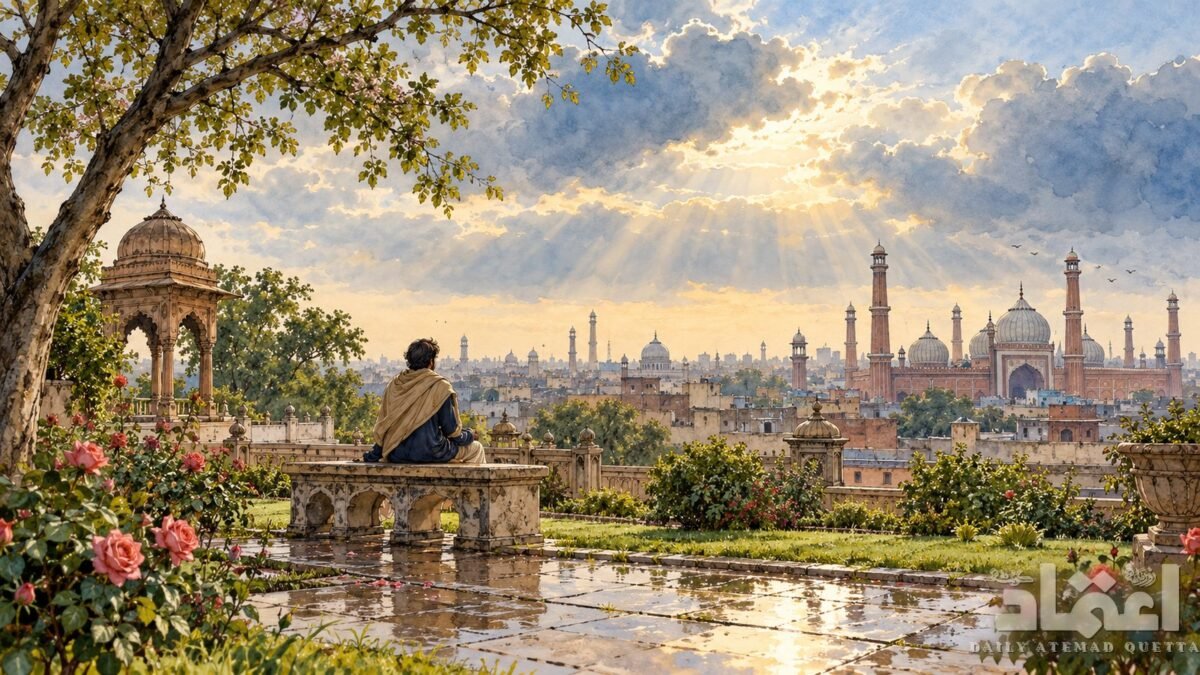
Mirza Asadullah Beg Khan Ghalib (1797–1869)2
Background
Simple language and the questioning refrain “kya hai” (what is it) have made this ghazal one of Ghalib’s most popular1. The questions in the opening verses are addressed to the heart and the beloved. The poet then turns to the universe: where did the greenery and flowers, the clouds and the wind come from? In the final verse, Ghalib admits his humility, but with playfulness.
Ghazal
دل ناداں تجھے ہوا کیا ہےآخر اس درد کی دوا کیا ہے
ہم ہیں مشتاق اور وہ بیزاریا الٰہی یہ ماجرا کیا ہے
میں بھی منہ میں زبان رکھتا ہوںکاش پوچھو کہ مدعا کیا ہے
جب کہ تجھ بن نہیں کوئی موجودپھر یہ ہنگامہ اے خدا کیا ہے
یہ پری چہرہ لوگ کیسے ہیںغمزہ و عشوہ و ادا کیا ہے
شکن زلف عنبریں کیوں ہےنگہ چشم سرمہ سا کیا ہے
سبزہ و گل کہاں سے آئے ہیںابر کیا چیز ہے ہوا کیا ہے
ہم کو ان سے وفا کی ہے امیدجو نہیں جانتے وفا کیا ہے
ہاں بھلا کر ترا بھلا ہوگااور درویش کی صدا کیا ہے
جان تم پر نثار کرتا ہوںمیں نہیں جانتا دعا کیا ہے
میں نے مانا کہ کچھ نہیں غالبؔمفت ہاتھ آئے تو برا کیا ہے
Difficult words
- ناداں: naive, unwise
- مشتاق: one who longs, one who waits
- بیزار: weary, displeased
- ماجرا: matter, tale
- مدعا: purpose, what is in the heart
- ہنگامہ: noise, bustle, commotion
- پری چہرہ: fairy-faced, beautiful as a fairy
- غمزہ و عشوہ و ادا: the beloved’s coquetry, airs and style
- شکن زلف عنبریں: a curl of fragrant hair
- چشم سرمہ سا: an eye lined with kohl
- درویش کی صدا: a dervish’s call, a prayer
- نثار: sacrifice
Sources
- Rekhta, Mirza Ghalib, ghazal “Dil-e-nadan tujhe hua kya hai”, text reproduced as it appears on the page (11 verses), accessed 18 October 2026. https://www.rekhta.org/ghazals/dil-e-naadaan-tujhe-huaa-kyaa-hai-mirza-ghalib-ghazals?lang=ur
- Rekhta, “Mirza Ghalib: Profile and biography”: real name Mirza Asadullah Beg Khan, born 27 December 1797 in Agra, died 15 February 1869 in Delhi. https://www.rekhta.org/poets/mirza-ghalib/profile?lang=ur
- “Ghalib”, Wikipedia (English): pen names Asad and Ghalib; titles Najm-ud-Daula and Dabir-ul-Mulk from Bahadur Shah Zafar in 1850 (citing Pavan K. Varma, Ghalib: The Man, The Times, Penguin, 1989). https://en.wikipedia.org/wiki/Ghalib
 More from Kalam
More → Ghalib: It has been long since I hosted my beloved
 Ghalib: It was not our fate that we should meet the beloved
 Ghalib: No hope bears fruit
 Ghalib: Where I see the mark of your footstep
 Hamdardi: Iqbal's poem for children, adapted from William Cowper
 Hum hue tum hue ke Meer hue: a ghazal by Mir Taqi Mir
 If Mir weeps with such a clamour: a ghazal by Mir Taqi Mir
 If this heart keeps troubling me: a ghazal by Khwaja Mir Dard