
Iqbal’s poem “Parinde Ki Faryad” from Bang-e-Dara, written for children
Iqbal wrote this poem in the voice of a caged bird for children. It appears in the first part of Bang-e-Dara.
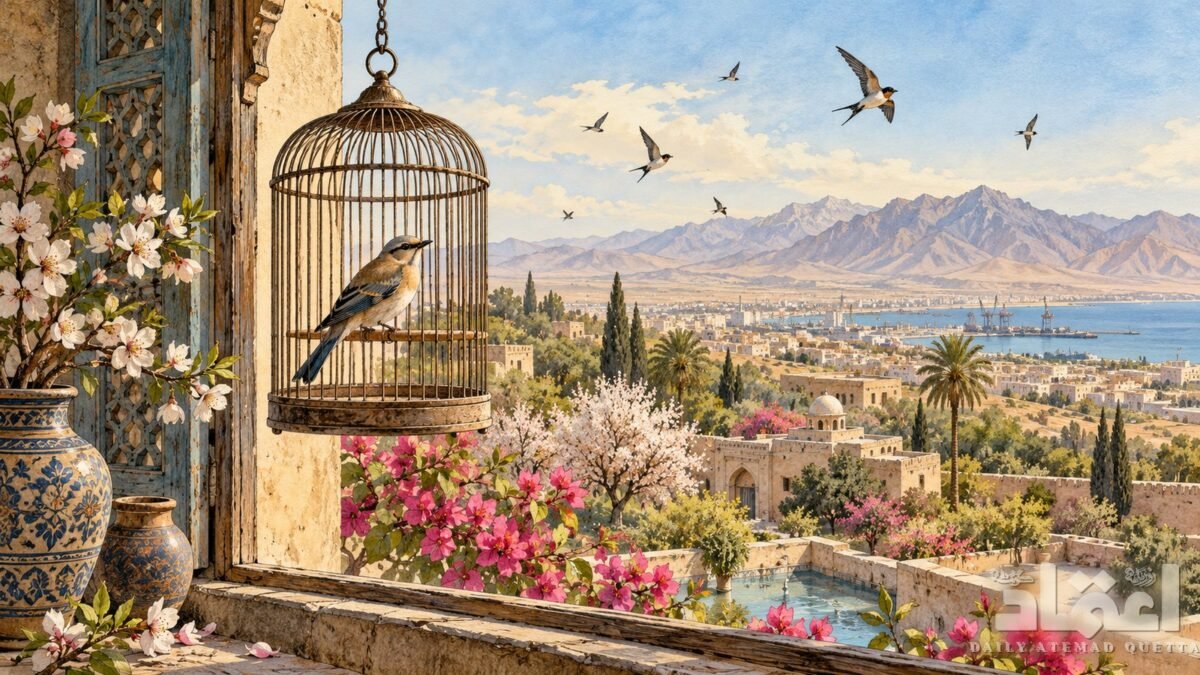
Allama Muhammad Iqbal · Bang-e-Dara, Part One
Background
Iqbal wrote this poem, spoken in the voice of a caged bird, for children. It appears in the first part of “Bang-e-Dara”123. It is also described as an early Urdu poem on kindness to animals and the value of freedom4.
The poem
I remember the days that are goneThe spring in the garden, the chirping of all
Where now is the freedom of my nestTo come at my own pleasure, to go at my own pleasure
My heart is struck when I rememberThe buds smiling at the tears of dew
That dear, dear face, that delicate formBy whom my nest was kept alive
Her voice does not reach me in my cageIf only my release were in my power
How unlucky I am, longing for homeMy companions are in the homeland, I lie imprisoned
Spring has come, the buds of the flowers are laughingIn this dark house I weep over my fate
O God, to whom can I tell the sorrow of this captivityI fear I may die of grief right here in the cage
Since I left the garden, this has become my stateThe heart is eating the grief, the grief is eating the heart
Do not be glad, listener, thinking this a songThis voice is the cry of aching hearts
Set me free, O you who imprison me. I am voiceless, a captive. Release me and take my blessing!
Difficult words
- Faryad: a cry for help, a complaint
- Chehchahana: birds calling together
- Shabnam: dew, the moisture that settles on leaves at night
- Kamini: delicate, beautiful
- Moorat: face, form
- Ashiyana: nest
- Sada: voice
- Qafas: cage
- Rihai: freedom, release
- Dukhra: story of sorrow
- Chaman chhuta: the garden was lost, separation from the garden
- Be-zuban: one who cannot speak for himself
Sources
- Rekhta, «پرندے کی فریاد», Allama Iqbal: text, with print source Kulliyat-e-Iqbal, p. 37, and note "بچوں کے لیے". https://www.rekhta.org/nazms/parinde-kii-fariyaad-aataa-hai-yaad-mujh-ko-guzraa-huaa-zamaana-allama-iqbal-nazms?lang=ur
- International Iqbal Society, Kulliyat-e-Iqbal (Urdu), Bang-e-Dara Part 1, «پرندے کی فریاد» (بچوں کے لیے): text used for comparison. https://iqbal.com.pk/poetical-works/29-parinde-ki-faryad.html
- International Iqbal Society, "Time Line": Bang-e-Dara published in Urdu in March 1924. https://iqbal.com.pk/iqbal/time-line.html
- "Muhammad Iqbal", Wikipedia (pointer only): "Parinde Ki Faryad" described as an early contemplation on animal rights, composed for children. https://en.wikipedia.org/wiki/Muhammad_Iqbal
 More from Kalam
More → Iqbal's poem "Shaheen" (The Falcon) from Bal-e-Jibril
 Jawab-e-Shikwa
 Khwaja Mir Dard's ghazal "Jag mein koi na tuk hansa hoga"
 Khwaja Mir Dard's ghazal "Teri gali mein main na chalun aur saba chale"
 Khwaja Mir Dard's ghazal: "As long as I live, I shall seek you"
 Khwaja Mir Dard's ghazal: "Having come into the world, I looked this way and that"
 Khwaja Mir Dard's ghazal: "Hum ne kis raat nala sar na kiya"
 Khwaja Mir Dard's ghazal: "In the garden at dawn the dew said, with tearful eyes"